
Let's build a common ground
Progress is real and there are many ways to achieve it.
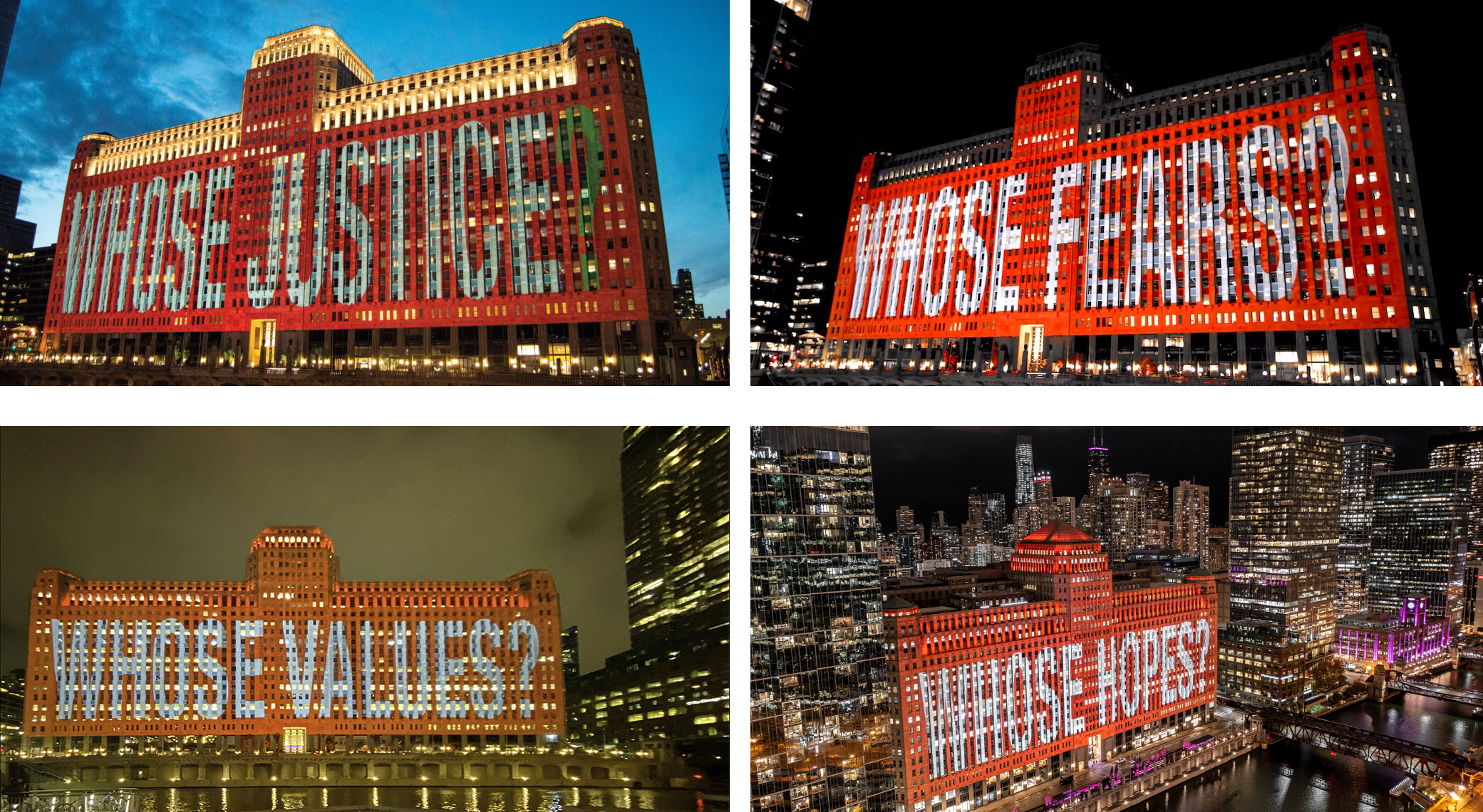
We just want to make sense
We’re bombarded on social media about what’s wrong in the world. News about natural disasters, crimes, political corruption, wars… This cascade of information is overwhelming. We feel anxious. We look for explanations because we want to understand what’s going on.
For that, we have the pundits. The people and institutions who (think they) know why everything is going wrong. It’s because of Fox News, they elucidate, or well—actually it’s the New York Times. It’s bureaucracy. Come on, it’s capitalism. It’s globalization. It’s the lack of traditional values. Nope, it’s conservative values. It’s the patriarchy. Inequality. Feminism. Trans people. Billionaires…
Each and every one of those things—we are told (actually screamed at)—is single handedly responsible for the shit show we have going on. If we addressed it, the world would be amazing.
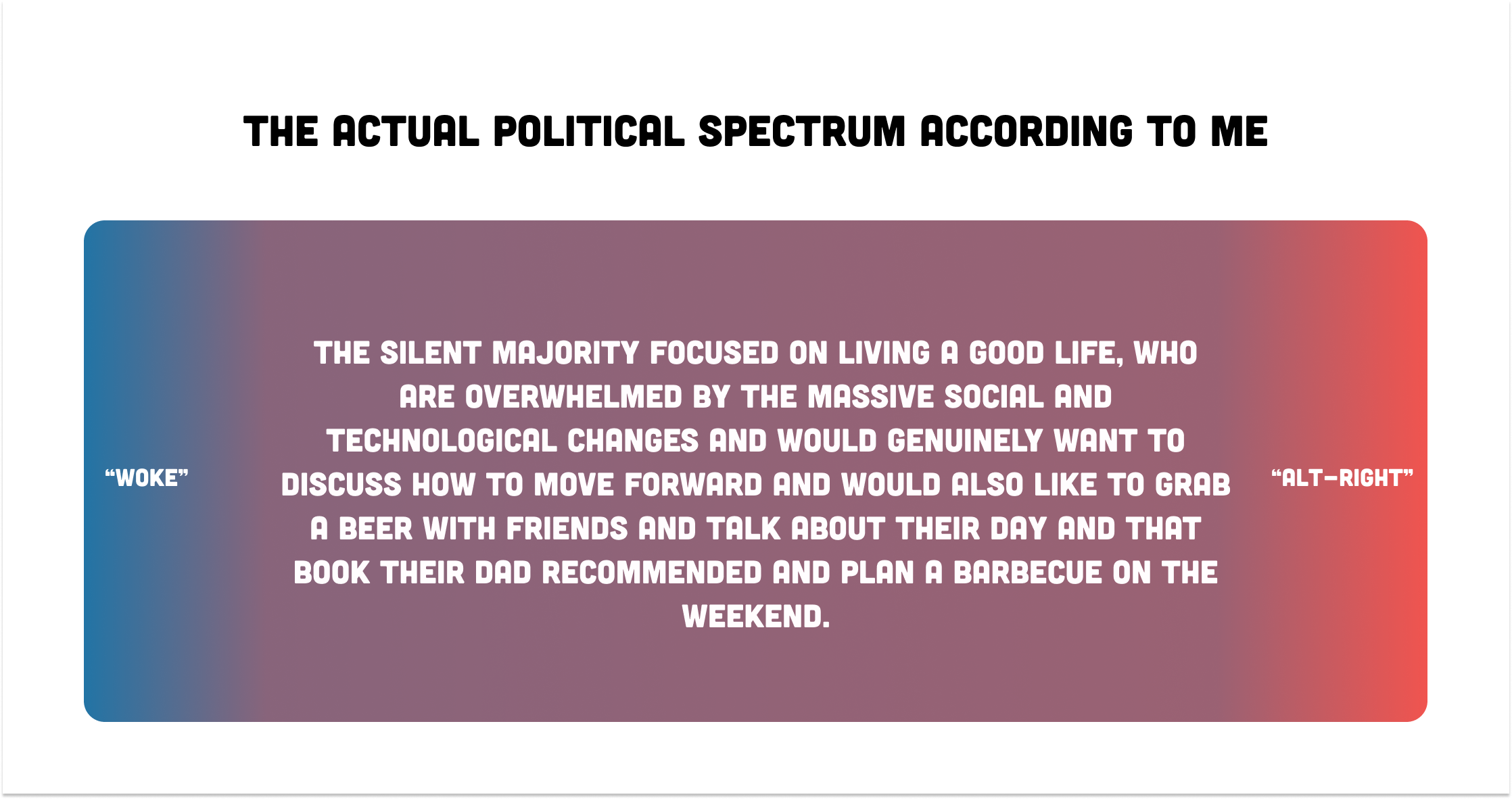
These radicalized, memefied left and right-wing narratives only offer one path forward. The “right” path. All else will bring chaos and depravity to the world. We—the majority—are pressured to pick a side on this seemingly inevitable choice. It’s either-or. And once we choose, we must accept all the other assumptions. If we want free-market policies then we must be socially conservative, like “right-wing” people are. If we want liberal policies regarding gender, then we must lean into the power of the state.
The either-or dichotomy is patently false. These are cheap ways to simplify our complex reality. Creating an “enemy” and making one’s ideology the righteous one.
Let’s analyze what’s wrong with the in-fighting so we can move forward. And no, you don’t have to stop fighting random people on Twitter or Reddit, don’t worry.
Moral arguments, not practical ones
In reality, the arguments are not about actual policies or real-world solutions, they are beliefs and moral judgments, more about exalting a utopian vision than enacting gradual improvement.
Utopias are moral constructs. It’s an imagining of the world as it ought to be, not as it is. It literally means “no place” in Greek. Utopian thinking does not propose how to level the playing field so more people can participate in the economy, but critique that there should be more justice, there shouldn’t be poor people, we should all be equal.
Utopias sound nice, they can serve as inspiration, but the trouble begins when we only think in utopian terms—in abstract terms—, and only accept those ideas as right. That’s when it utopian thinking becomes authoritarian. When it imposes one set of values and pushes out other ideas in disagreement. When it aims to destroy what we’ve collectively built over generations in order to build a “perfect” world.
Discussion might turn for instance on why billionaires are “bad” and capitalism is “evil”and why we should “eat the rich”. It's easy to hate extreme versions of capItalist greed, but we tend to forget that capitalism has lifted out of poverty millions of people or that it was largely responsible for the industrial revolution. Just because we don't like one extreme of a thing doesn't mean we need to hate (and dismantle) the whole thing. We are just throwing babies out with the bathwater. Capitalism. Economic growth. Democracy. Freedom. Natalism. Entrepreneurship. Agency.
Utopian thinking forgets that the world is is never going to be perfect. We have to be able to move forward knowing that: a) the world will never be perfect and b) the world is getting better. There is no one solution but a myriad improvements to our social and economic systems.
How do we move forward?
What’s worse, while the loudest shout and blame each other, we all face enormous challenges like a growing multipolar world order, climate weirding and extreme weather events, the rise of illiberal states, unparalleled scientific and technological disruptions fueled by AI, and people still barely making ends meet.
And yet, our institutional capacity is stagnated. Our capacity for collaboration has diminished. Our political vision is stuck in assigning blame.
The cultural narratives push us to either extreme instead of building a common ground. A common ground built on the very human concerns that most of us share: how to make our life more meaningful and interesting and rich. How to achieve global progress and individual flourishing. That’s the ground where big, post-partisan projects can grow.
Where are the voices building bridges in this polarized environment? Where are the movements and institutions proposing real-world solutions to our real-world problems? Where are the places for connection and meaning-making?
Let’s remember our agency
All this fighting and polarizing ideas might make us think that we are just tiny cogs in a massive unstoppable machine. But that couldn’t be further from the truth.
We are builders, all of us. None of this: our culture, cities, economy, technology, progress, even our families, are a given. We shouldn’t take them for granted. We play an active role in creating and maintaining our relationships, our work and our society.
We need to remind ourselves that we have agency, that we have the power to improve our lives, achieve our goals and inflict change.
If we feel that that change is impossible, then the actual people doing the shouting will win. They know the power of incendiary beliefs. They will build movements and they will win elections and enact laws. (Remember how the Nazi party came to power in the 1932 election of the Reichstag.)
Our world might be transformed in unrecognizable ways, removing hard-won freedoms and rights, while the majority of people continue second guessing their own power.
That’s a future that could happen, if we let it.
This is the only time in history where I (a gay guy) can get married (two years in October) and have children (aiming for three kids) and live in relative prosperity without fearing bullying, abuse, jail or death. That’s freaking awesome. Western democracies might have a lot of faults but I don’t take these rights and this freedom for granted, nor should you.
The beauty and magic of the (liberal) world in which we live today is that it doesn’t impose a single way to live. Each of us have the opportunity (and the right!) to live the way we want to.
postscript 📮
I’ve been thinking a lot about a space where we can discuss pressing themes like global progress and individual flourishing without all the polarization and I’ll have some news soon!
In the meantime, let’s talk:
Do you already have a group with whom you can make sense of things without getting into a “you’re wrong, I’m right” debate?
I’m not saying we shouldn’t have beliefs, but they should be something we arrive by our own thinking. So, what are some firm beliefs you have? What are some weakly-held beliefs?
What other controversial themes would you like to see me cover?
First of all, great work Santiago. I really like the topics you choose.
I'm also (as Leo) tired of the polarization. I'm an economic liberal but I also do believe that social rights (of all kinds) are importand and that we -as a world- must move forward so that everyone's lives matter. It is also important not to forget that never -as a civilization- have we had a better quality of life & better opportunities to move from one "social class" to another, so let's focus on what's -in reality- important!
Keep writing!
Sick and tired of the polarization online, myself. It is a little better in real life but real life can be deceiving. People don’t always project how they really feel.
You’re spot on regarding the polarization push happening now. Only thoughtful people like you can return the conversation where it needs to be if we are to get over the current situation . Great work!